

Thoughtful Thursday Maximize Health Benefits: Focus on Organic Dirty Dozen & Clean Fifteen

Photo by Mark Stebnicki on Pexels.com

As awareness of health and environmental issues continues to grow, more people are turning to organic produce to reduce their exposure to pesticides and support sustainable farming practices. While buying all organic can be costly, alternatively you can focus on certain fruits and vegetables to maximize the benefits.

The Environmental Working Group (EWG) publishes two primary lists every spring, the “Dirty Dozen” which is safest to buy organic and the “Clean Fifteen” which is safest to buy conventionally.
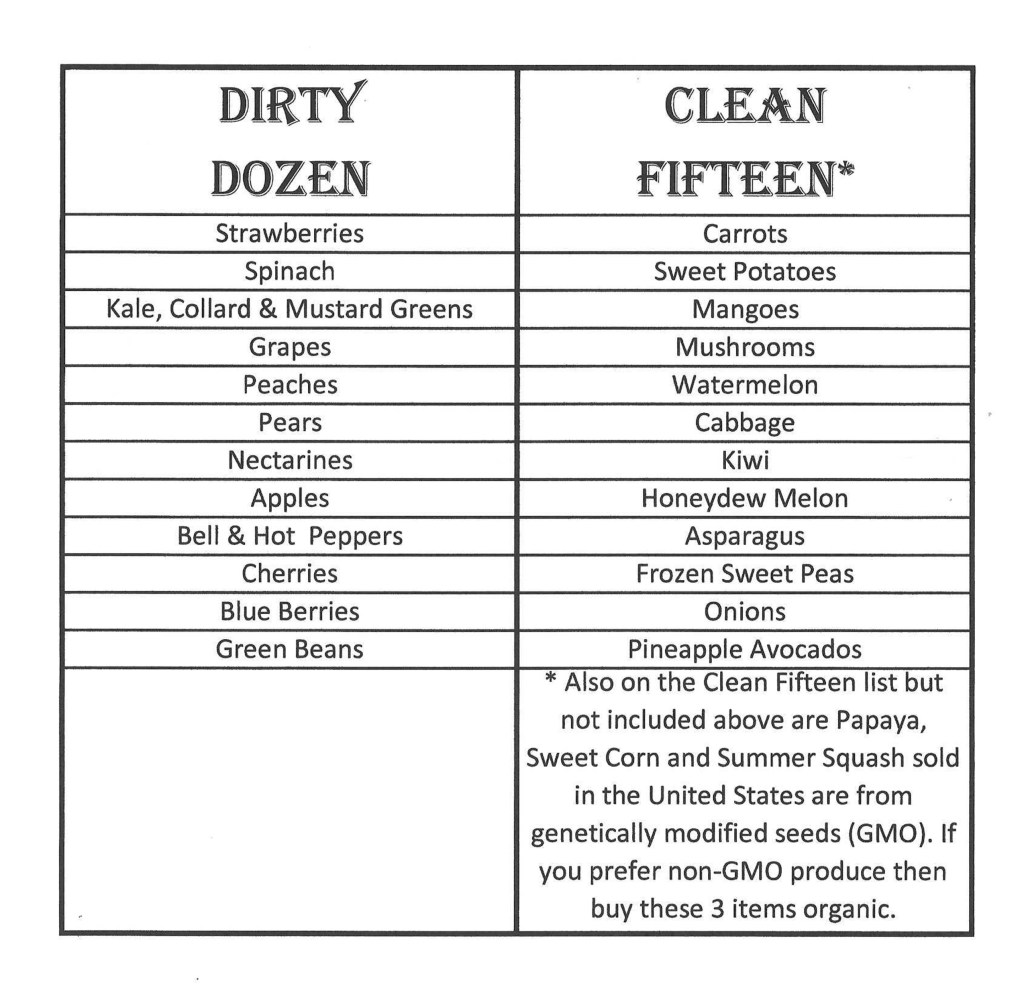
Here are some tips on making shopping for organic produce easier on the wallet:

  1. Shop Seasonally: Organic produce is often cheaper when it’s in season.
  2. Visit Farmers Markets: Local farmers markets can offer fresh, organic produce at competitive prices.
  3. Join a CSA: Community Supported Agriculture (CSA) programs allow you to buy shares of organic produce directly from local farmers.
  4. Grow Your Own: If you have space, growing your own organic fruits and vegetables can be a rewarding and cost-effective option.
  5. Prioritize the Dirty Dozen: Focus your organic purchases on the produce listed in the Environmental Working Group’s (EWG) Dirty Dozen, which highlights fruits and vegetables with the highest pesticide residues.

By prioritizing these key fruits and vegetables, you can significantly reduce your pesticide exposure and enjoy healthier produce. Making informed choices about organic options supports sustainable farming and contributes to a healthier planet.

Would love to hear from you! Share your experiences and tips on buying organic produce in the comments. For example: How do you prioritize your organic purchases? Do you have favorite markets or creative ways to save on organic options? Let’s foster a community of shared knowledge for healthier, sustainable choices✨

Hope you found this post useful, thanks for stopping by!!

Share the Happy💖

Thoughtful Thursday Organic Produce vs. GMO: What’s the Difference?

Photo by Clem Onojeghuo on Pexels.com

In recent years, the debate between organic produce and genetically modified organisms (GMOs) has gained considerable attention. Understanding the key differences can help you make informed decisions about what you eat.

Organic Produce

Organic produce is grown without synthetic chemicals, using natural methods like composting, crop rotation, and biological pest control. These practices promote environmental sustainability and protect biodiversity. Foods labeled “organic” are often seen as healthier and more eco-friendly.

GMOs

Genetically modified organisms (GMOs) are plants or animals with altered DNA to introduce traits like pest resistance or drought tolerance. Proponents argue that GMOs can lead to higher crop yields, reduced pesticide use, and enhanced nutritional content.

Health and Safety

The safety of GMOs is debated, but many organizations like WHO and AMA say they are safe to eat. Some consumers, however, worry about long-term health effects. Organic produce, free from synthetic chemicals and GMOs, can be reassuring for those avoiding potential risks of conventional farming methods.

In regards to health effects, this is my personal experience: I love tomatoes, and had one with dinner. Around 3 am, I woke up in extreme pain, unable to close my hands into fists or move my legs, arms, and even my neck. The next day, I did research and found it was likely either a sudden onset of Rheumatoid Arthritis or an adverse reaction to GMOs.

The easiest option was to rule out was the GMO tomato so I decided to eat another tomato. I clearly didn’t think that through because the same exact thing happened. The pain was excruciating and took several days to subside. However, for me this confirmed the painful inflammation I was experiencing wasn’t arthritis, but instead, my body’s response to the GMO tomato I had eaten.

Environmental Impact

Organic farming avoids synthetic chemicals and promotes soil health, enhancing biodiversity and reducing pollution. However, it typically requires more land and labor. GMOs can reduce the need for chemical inputs and increase crop resilience, but there are concerns about their impact on non-target species and potential gene flow to wild relatives.

Cost and Availability

Organic produce is often more expensive than conventional produce due to the labor-intensive farming practices and lower yields. GMOs, on the other hand, can be produced more efficiently and are typically more affordable. The availability of organic produce can also be limited depending on your location.

While not everyone will experience the severe reaction I did to GMOs, organic produce is generally considered better for your health and the environment, provided your budget allows. Stay tuned for next week’s discussion on which produce items are consistently safer to buy organic, and which ones are acceptable in their conventional form.

Hope you found this post useful, thanks for stopping by!!

Share the Happy💖