Thoughtful Thursday Easy Homegrown Sprouts

Last week I talked about the Benefits of Growing your own Sprouts and today I’m excited to guide you through the simple process of growing them indoors. You’ll be amazed at how effortless it is! All you need are a few basic supplies all of which are available on Amazon or possibly in your local health food or grocery stores. I’ve included some links in the supply list below but there are many options.

Supplies:

Instructions:

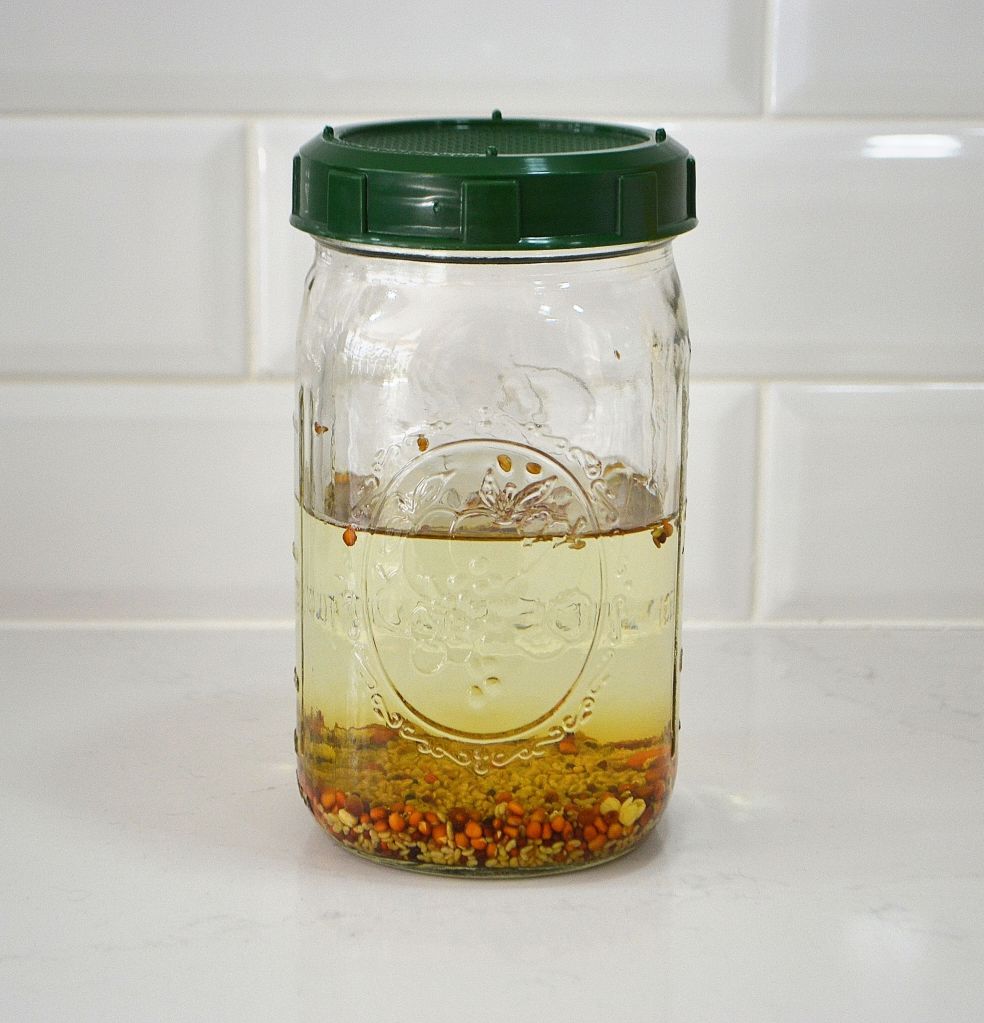
  1. Fill your mason jar with 2 cups of water and add 1-1.5 tablespoons of seeds. Gently mix the seeds in the water (sometimes they clump together). Place the sprouting lid on and let them soak overnight for 8-12 hours. Follow the recommendation on the seed packet.
  2. Rinse the seeds 2-3 times until the water is mostly clear.
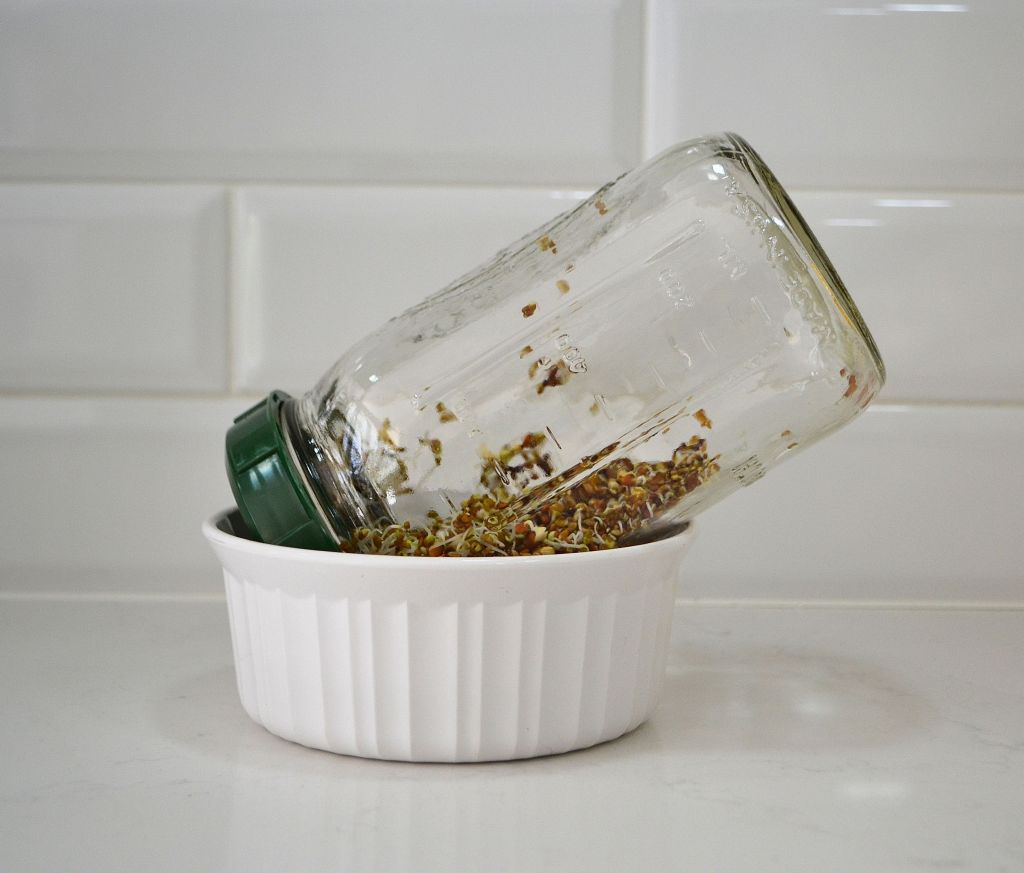
  3. Invert the jar and let it slant slightly inside a bowl allowing the remaining water to drain from the seeds (see pictures below).
  4. Rinse the seeds 2-3 times per day, and put them back into the bowl inverted. Florida is very humid so I only rinse 2 times per day. If you use too much water, you may grow mold so adjust this based on your environment.
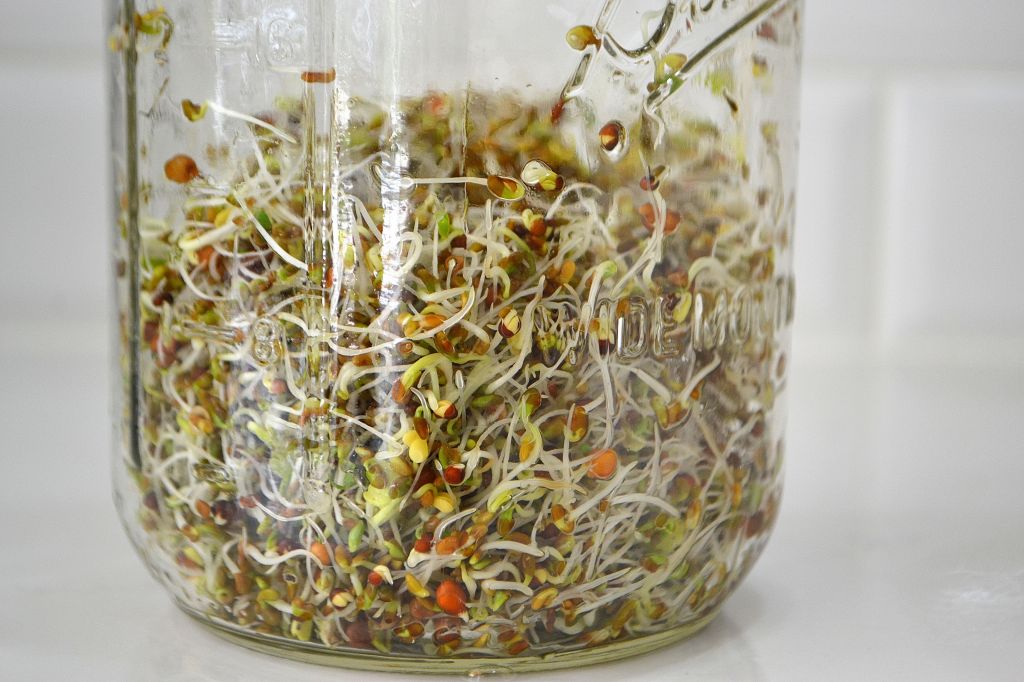
  5. Depending on the seeds you have it will take about 4-5 days to get sprouts. At that point they may be yellow so place them on a sunny windowsill to help turn them green.
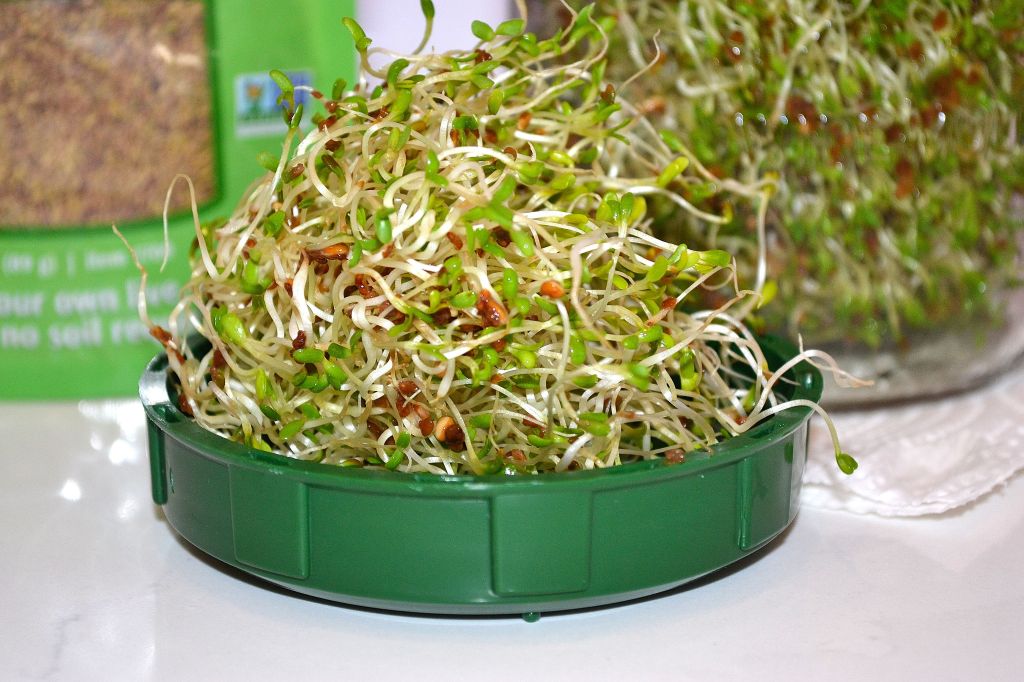
  6. Give them a final rinse and remove any of the seed hulls. Put the sprouts back into the jar and store in the fridge. Now they’re ready for you to enjoy!

Through my experimentation, I’ve observed that alfalfa tends to sprout faster than broccoli. However, in the photos you see here, I’ve opted for a salad mix variety, which not only sprouts delightfully but also boasts a delicious blend of organic radish, broccoli, and alfalfa. These sprouts aren’t just nutritious; they’re versatile too! I enjoy incorporating them into salads, blending them into smoothies, and using them as a flavorful garnish on a variety of vegan dishes. They truly elevate any meal!

Growing your own sprouts at home is not only easy and rewarding but also adds a fresh and nutritious touch to your culinary adventures. Whether you’re a salad enthusiast, or a smoothie aficionado these vibrant sprouts are sure to delight your taste buds and nourish your body. So why wait? Start sprouting today and embark on a journey of delicious and wholesome eating!

Thanks for stopping by!

Share the Happy đź’–

“Good nutrition creates health in all areas of our existence. All parts are interconnected.” ~T. Collin Campbell
Thoughtful Thursday What’s in your fruit?

Photo by Carlo Martin Alcordo on Pexels.com

I remember shopping at the grocery store when I was a kid with my mom and being able to buy fruits only when they were in season. I also remember everything bursting with flavor and aroma. But if you go shopping today, pretty much every fruit is available year round from all around the world and sadly they don’t taste or smell as good as they used to.

After doing a little research I found that many fruits are artificially ripened using different chemicals and here’s why: In order for fruit to ripen naturally, it must contain ethylene, a gaseous plant hormone. Green, unripen fruits have low levels of ethylene. But as the fruit matures ethylene production increases and signals the plant it’s time to ripen the fruit. Even after the fruit is harvested, ethylene continues to be produced and as a result it decreases the shelf life of fruits.

Scientists came up with a way to extend the shelf life of fruits by picking them while green and ripening them with artificial ripening agents. However, this process is highly contested around the world because of the health risks associated with these ripening agents. It is said that consuming fruits, on a regular basis which have been artificially ripened can cause heart conditions, lightheadedness, and even skin ulcers depending on the ripening agents used. Thankfully most of the world banned the use of the really toxic agents but there are a few countries which still allow them to be used.

The reason the fruits don’t taste as good as they used to is because by artificially ripening the fruits only the external peel actually ripens. The inside of the fruit will basically remain green and raw. I’ve had avocados which I left out to ripen on the counter but they never did. After some time I ended up cutting them open only to find they were rotting from the inside out and now I know why.

With almost 80% of fruits being artificially ripened, I’m left scratching my head. It’s hard to tell what has been artificially ripened and what hasn’t unless you contact the companies and find out. Apparently, organic fruits aren’t excluded from this process but are less likely to be artificially ripened.

So what do you do? Fruits are very important for a healthy diet. Your best bet is to go back to the old ways and buy locally grown produce that will “hopefully” not be treated with these artificial agents. An even better idea is to plant a small garden and grow your own food. Mother nature made growing many plants fairly easy and you’ll have better control over your health plus you’ll reduce your grocery bill too.

Hope you found this post helpful, thanks for stopping by!!

Share the Happyđź’–

“A garden feeds more than the table, it feeds the soul.” ~Unknown

Photo by Karen Lau00e5rk Boshoff on Pexels.com

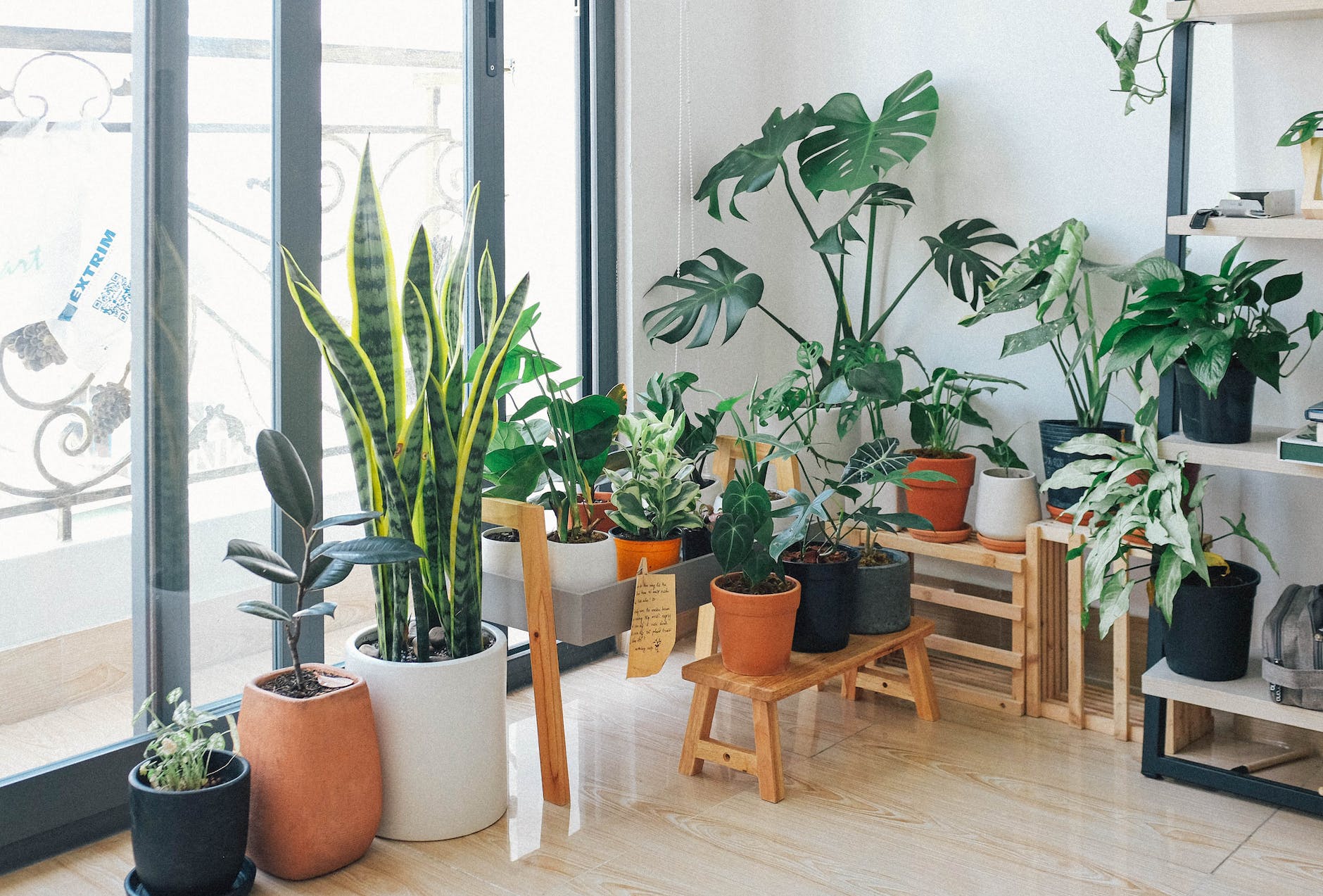
Thoughtful Thursday Air Purifying Plants

Photo by aliona zueva on Pexels.com

The air in our home can be filled with harmful chemicals and pollutants. Even if you take care not to use heavy scented cleaning agents you’re still not safe. The countertops in your kitchen and bathrooms have been known to emit harmful chemicals into the air without you ever noticing. Even installing new flooring, carpets or painting the walls can also pollute the air you breathe.

Luckily there is a simple solution. Certain houseplants are quite efficient air purifiers. Plus they bring lots of good vibes to your home. The next big question is how many plants do you need? The answer is you only need about two (10-12 inch potted) plants per every 100 square feet of space. For example a 13×15 foot room is 195 square feet so you would need 4 small plants to clean the air in that room. Below is a list of some of the best purifying plants for your home.

21 Air Purifying Plants:

  • Aloe Vera
  • Bamboo Palm
  • Boston Fern
  • Chinese Evergreen
  • Dragon Tree
  • English Ivy
  • Ficus
  • Fittonia Frankie
  • Flamingo Lily
  • Golden Pothos
  • Lady Palm
  • Lemon Button Fern
  • Mass Cane / Corn Plant
  • Parlor Palm
  • Peace Lilly
  • Philodendron
  • Red-Edged Dracaena
  • Rubber Tree
  • Snake Plant / Mother-in-Law’s Tongue
  • Spider Plant
  • Wax Begonia

Each of these magnificent natural air purifiers requires different care and lighting so keep that in mind when choosing a plant for your home. Also having living plants in your space has shown to be quite therapeutic in relieving stress, boosting your productivity and overall well being. So add some happiness and good vibes to your home!

Thanks for stopping by!!

Share the Happyđź’–

“We might think we are nurturing our garden, but of course it’s our garden that is really nurturing us.” ~Jenny Uglow

Photo by Huy Phan on Pexels.com